
Searching Harnett County Criminal Dockets
Two tools do most of the work here. Harnett Smart Search finds the record itself. Harnett Search Hearings answers the narrower question of the next court date.
The main online route is the North Carolina eCourts Portal. Harnett runs on the Odyssey case-management system. One Portal search thus reaches both the Harnett Superior Court felony layer and the Harnett District Court misdemeanor and infraction layer. In Smart Search, enter a record number or a name in Last, First form. When results appear, click the underlined case number. Open the Register of Actions, also called the Case Summary, rather than trusting a single results-list line.
When the question is simply when to show up, use Search Hearings instead. The Portal is not the only path into a Harnett court record. The Harnett Clerk contact directory lists the criminal desk at 910-814-4588. The clerk counter at the Harnett County Courthouse, 301 W. Cornelius Harnett Boulevard, Suite 100, Lillington, handles file inspection, non-digitized items, and clerk copies in person. Harnett also hosts an early eCourts kiosk. The clerk reports that inquiry-only criminal name searches at the public terminal are free.
- Open Portal Smart Search and enter a full record number or the name in last-name, first-name order.
- Use the Location filter to narrow statewide results to Harnett after entering the basic search criterion.
- Select the underlined record number and read the Register of Actions, hearing rows, and available dispositions.
- Use Search Hearings for a current setting, then compare the result with the current local schedule when needed.
- Call the Harnett criminal desk or visit the clerk for a certified copy, unavailable document, or question about the original file.
Harnett Criminal Portal Search
Filters sharpen a search; they cannot start one. The Portal has no separate Harnett criminal database. Smart Search needs a record number or a name first. Only then does it offer filters for search type, location, case type, case status, and party details. A broad Harnett query tops out at 200 results. The usual fix is to add the Harnett location along with a tighter name or record number. Wildcards work too: put an asterisk after the first known part of a name.
| Portal control | Use for a Harnett criminal case |
|---|---|
| Record Number or Name | Enter one basic criterion, with names in Last, First order. |
| Location | Select Harnett to narrow Odyssey results from the statewide system. |
| Case Status | Use a listed status such as Pending, Appealed, Reopened, or Stayed to narrow a result. |
| Search Hearings | Choose the separate hearing search for a date, courtroom, hearing type, and date range. |
Anyone can search and view public information without registering. A voluntary account adds the ability to save cases, while elevated access stays limited to users whose statutory authority has been verified. A record you expect may not appear for several reasons. The cause could be a name-format mismatch, a restricted record, or something only the clerk can confirm. Keep one caution in mind. The Portal's ordinary public view is not a clerk-issued certified record.
Inside a Harnett County Criminal Docket
Think of the Harnett Register as a procedural story told in order. It is not a single verdict label. Read the charging or initial record first. Then look for any bond or release information that appears, hearing settings, motions and orders, the disposition, and financial information when populated. The official Portal guide places current judgment detail in the Register and its Dispositions area. For a live matter, check three things together. The Register, a current hearing row, and any signed order all matter.
| Record number | The Portal locator used for an exact search; select its underlined result to open the case. |
|---|---|
| Case status and type | Filters and result labels can include Pending, Appealed, Reopened, Stayed, or listed dispositions. |
| Register of Actions | The Case Summary navigation and current procedural record for the Harnett case. |
| Hearings | Shown when information is present; date, location or courtroom, and hearing type can be checked through Search Hearings. |
| Financial Information | Appears when available; use the Register rather than Judgment Search for current information. |
| Restrictions | Sealed, confidential, and sensitive items are not available through ordinary public Portal access. |
Harnett Criminal Register Status Words
Status words in Harnett describe where a case stands. The Register supplies the events behind each label. Trust the Portal's own definitions over any homemade code list. In Harnett, Pending means the case remains unresolved under Portal's status taxonomy. Stayed means proceedings are paused. Check the Register and any order before assuming a future hearing is canceled. Appealed marks an appeal event or path, not proof that the original Harnett file vanished.
- Disposition
- The Register section for a final or post-final outcome and current judgment detail.
- Trial De Novo
- A new-trial status that can describe a lower-court appeal path rather than review of a transcript.
- Transferred to Superior Court
- A Portal status showing that the matter moved into the Superior Court division.
- Bond Forfeiture
- A searchable Portal case category distinct from a merits disposition.
Harnett's unified clerk keeps records across both court divisions, yet the division and status still matter. A District Court criminal or infraction entry can carry a different schedule and procedure than a Superior Court felony entry. One caution: a listed disposition does not erase the earlier public events recorded in the Register.
How a Criminal Case Moves
A Harnett criminal docket reads as a progression, not one fixed sequence of dates. Events gain meaning from their order in the Harnett Register of Actions. The Portal may show the initial case record. Hearings, motions or orders, a plea or trial event, and a disposition may appear too. Some fields fill in only when the information exists. A missing Financial Information or Hearings section says nothing by itself. That section's absence tells you nothing about the result of a Harnett case.
Docket flow: Filing → Arraignment → Pretrial → Plea or Trial → Disposition → Sentencing.
Local forms and schedules add useful context at the setting stage. The Harnett local administrative schedules publish separate court-date streams, though the individual case Register remains the stronger case-specific check. Remember that a setting on an administrative calendar is no promise a jury trial will happen that day.
Harnett Criminal Calendar Streams
Start with the label. Every Harnett criminal calendar entry names its session type. That label tells you what the hearing date actually is.
The county splits its Superior Criminal schedule into administrative, trial, and probation calendars. District Court does something similar, listing probation-cause and probation-violation dates on its own schedules. Why does this matter? A trial calendar sets when a case may be tried. An administrative calendar handles management steps, and a probation date tracks supervision. The Harnett local rules and forms page posts the Docket Management Plan for Criminal Superior Court. It also posts the Criminal Case Management and Docketing Plan. Read the schedule as a countywide menu. Then confirm the single case through its Portal hearing row, the clerk, or the courtroom.
For the plans behind these calendar streams, Harnett's local rules and forms collection shows how the court manages its criminal docket.
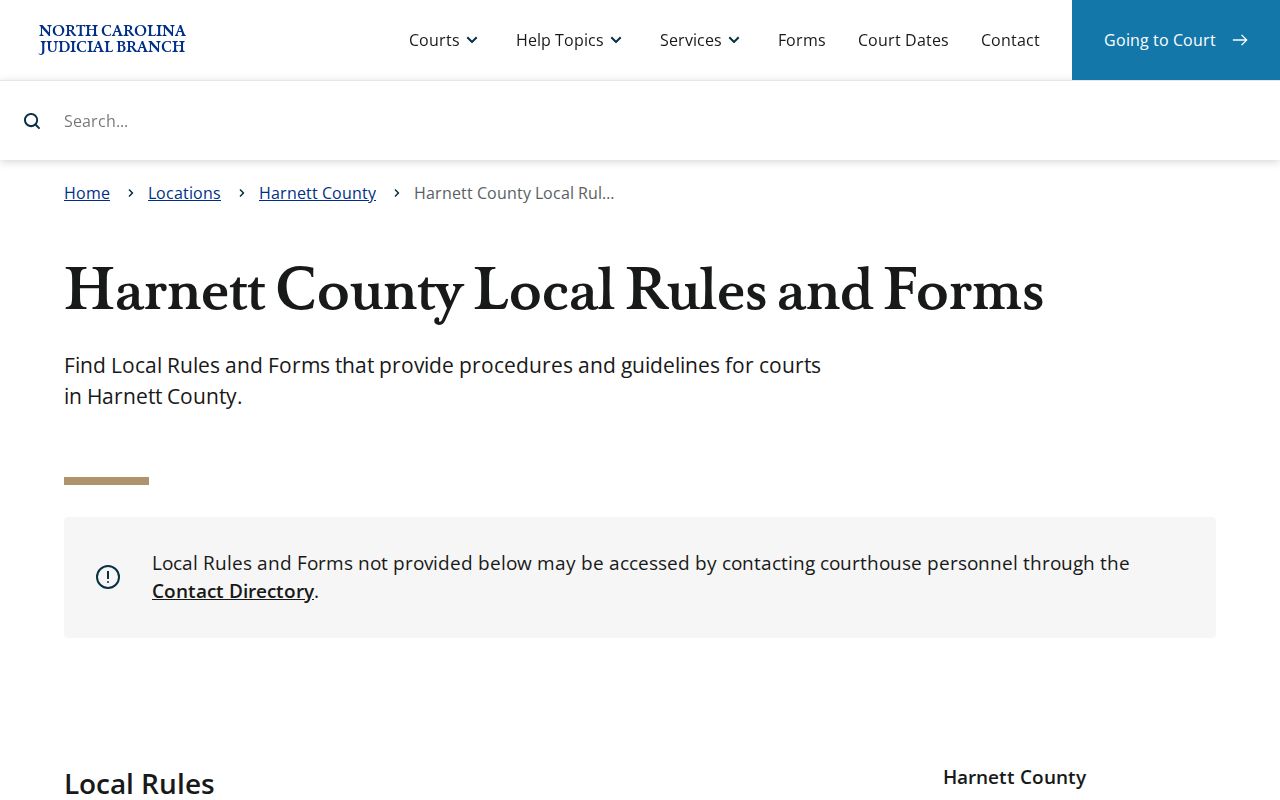
These plans manage the Harnett County criminal docket as a whole. For one specific case, the Register of Actions still does the checking, and the plans sit beside it rather than in place of it.
Courts That Hold Criminal Dockets
One clerk holds the criminal docket for both Harnett trial-court divisions.
North Carolina's General Court of Justice unifies the state's trial courts. For Harnett County, that means a single record keeper across its divisions. Superior Court takes felonies, jury matters, and the major-criminal layer. District Court handles misdemeanors, infractions, traffic, and related lower-criminal work. Magistrates issue initial criminal process. Through all of it, the structure stays unified. The Harnett Clerk of Superior Court remains the clerk behind the county court records.
The Harnett Judicial Branch county page lists both the Superior and District court services. Some sessions also run at the Dunn Court Annex, 401 East Broad Street, Dunn. For an online case lookup, begin in Portal. Narrow the location to Harnett. Then read the division or setting field in the record to learn where the case is being heard.
Harnett Criminal Veterans Court Dates
Harnett District 12 hosts a Veterans Treatment Court. The setting stays tied to the underlying case. Harnett's schedules list Veterans Court Dates 2026 as its own calendar stream. There is no separate public criminal-docket database for it. Public case events still flow from the underlying case's Register of Actions, with the usual limits on confidential material. A Veterans Treatment Court date does not change where the public record lives.
The statewide Veterans Treatment Court program page names Harnett's district as a program site. The clerk page lists a Veterans Court director at the Lillington courthouse and announces no separate portal. Use the Portal record number for public case events. The clerk or program contact handles scheduling questions.
North Carolina's Veterans Treatment Court information describes the statewide program behind Harnett's dedicated calendar stream. Harnett's Veterans Court dates are part of that program.
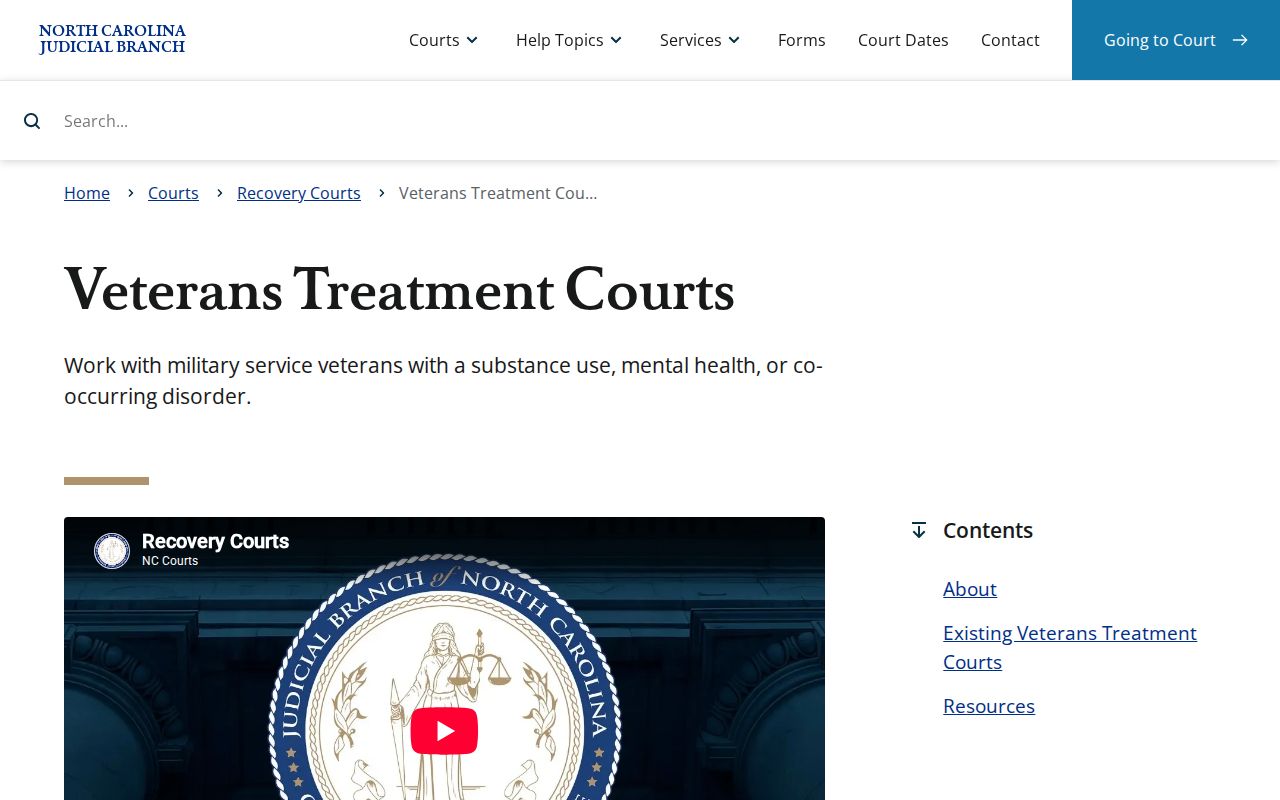
That separate date listing is useful for one thing. It marks a specialized setting, not a separate searchable court-record system for Harnett County.
Sealed Dockets and Public Access
Unsure whether a Harnett record has a public route? The clerk can confirm it.
Public access to a Harnett County case starts with Portal or the clerk office. G.S. 7A-109 generally opens clerk records to inspection during regular hours unless another law limits access, and it permits remote electronic access arrangements. That statute does not put every criminal item online. Portal's ordinary view leaves out sealed or confidential records, along with documents carrying sensitive information.
North Carolina access rules:
G.S. 7A-109 supports public inspection of clerk records except where access is prohibited by law.
G.S. 7B-3000 protects juvenile records and allows inspection only as the law or a court order permits.
G.S. 15A-151 treats expunged court records as confidential with narrow disclosure channels.
A missing Harnett result has three usual causes. The spelling or format may be off, there may be no matching record, or a restriction may apply. Fix the search input and confirm the Harnett location before calling the assigned clerk. Elevated Portal access is not something the public can simply request. The Harnett Clerk requires verified statutory authority for it.
Harnett Criminal Records Before Odyssey
Harnett County's move to Odyssey changed what a docket looks like online. It did not change who keeps the originals.
Harnett went live with Odyssey and e-filing on February 13, 2023. It was one of the early pilot counties. Portal became the public online entry point. Clerk-counter and kiosk paths stayed open for records work. One quirk survives from the conversion. Events migrated from before the launch can show a 12:00 a.m. timestamp, and in a Harnett criminal Register that is a conversion clue, not proof of a midnight hearing.
The Harnett eCourts page describes Odyssey, Portal, File & Serve, and the related tools. An older Harnett record can look thin online. The reliable next step is clerk inspection or copy help. That beats assuming an online-archive cutoff. A historic time display deserves a check against the Register, the hearing rows, and any signed order.